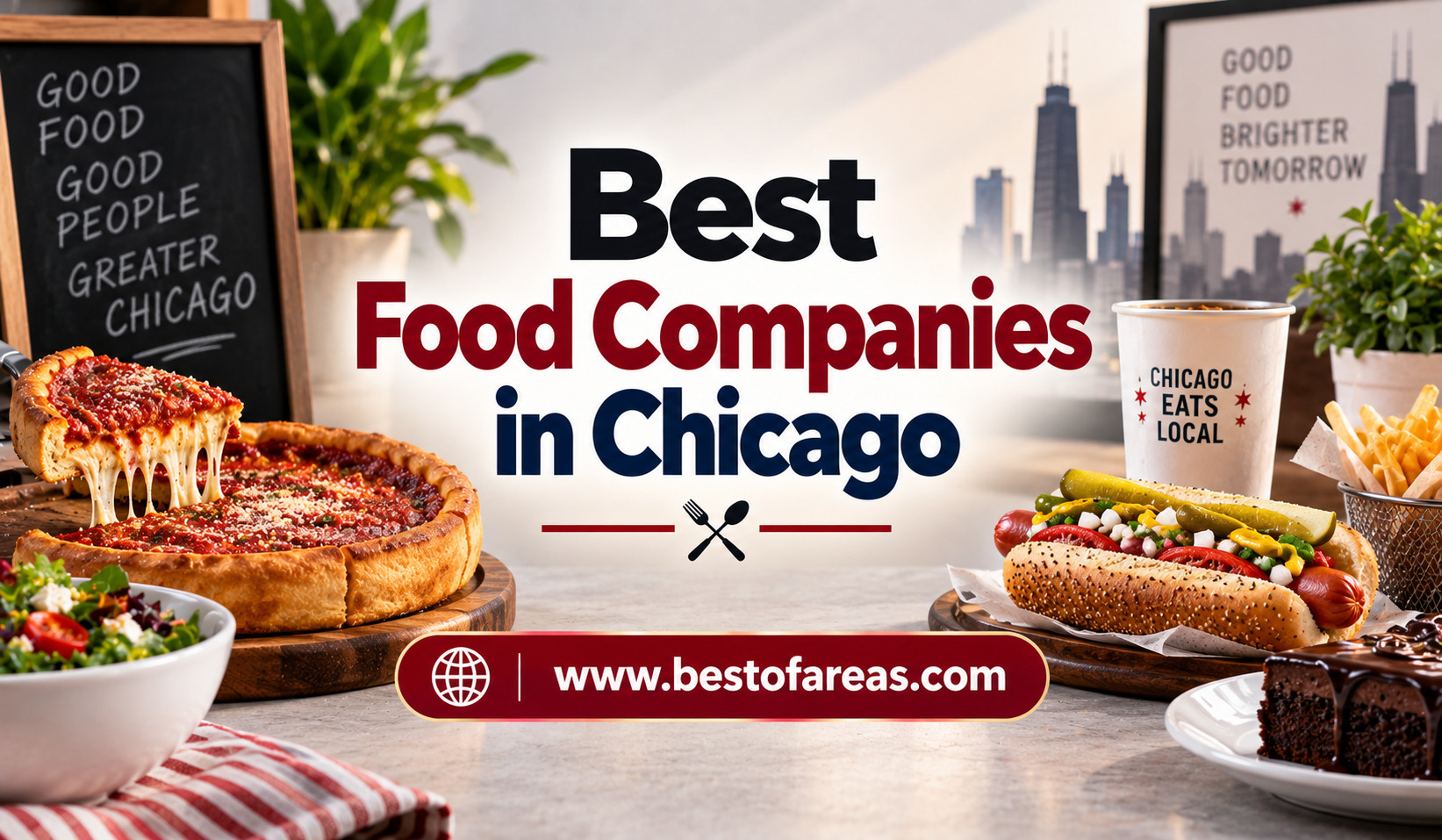
Chicago is one of the most important food business centres in the United States. The city has a long connection with food manufacturing, packaged foods, restaurants, food distribution and agricultural products. Today, Chicago and its surrounding metropolitan area are home to major food companies, global snack brands, restaurant businesses and innovative food technology companies.
The city’s food industry is much larger than its famous deep-dish pizza and hot dogs. Chicago has developed a broad business ecosystem that includes food manufacturing, ingredients, consumer packaged goods, restaurant operations and food technology. Chicago’s food manufacturing workforce is also one of the largest in the country, with major employers including McDonald’s, Mondelēz International, ADM, Conagra Brands, Kraft Heinz and Mars Wrigley.
Here are some of the best-known food companies with strong connections to Chicago.
Mondelēz International
Mondelēz International is one of the biggest food companies headquartered in Chicago. The global company is particularly known for snacks and confectionery, with a portfolio that includes internationally recognised brands such as Oreo, Ritz and Cadbury.
The company operates across numerous international markets and has built its business around snacks that are sold through supermarkets, convenience stores and other retail channels.
Mondelēz also represents Chicago’s importance as a headquarters location for global food businesses. The company employs tens of thousands of people worldwide and has a major presence in the international packaged-food industry.
Conagra Brands
Conagra Brands is another major food company headquartered in Chicago. Its portfolio includes well-known products such as Birds Eye, Duncan Hines, Healthy Choice, Marie Callender’s, Reddi-wip and Slim Jim.
The company operates across frozen foods, snacks, meals and other categories. Its products are distributed through retail and foodservice channels, giving the business a broad presence in the American food market.
Conagra says it operates 42 manufacturing facilities and employs approximately 18,600 people. Its Chicago headquarters also places it within one of the country’s strongest food-business ecosystems.
Kraft Heinz
Kraft Heinz is one of the world’s largest packaged-food companies and has its headquarters in Chicago. The company manages a large collection of food brands across sauces, condiments, meals, cheese and other grocery categories.
Brands associated with Kraft Heinz include Heinz, Kraft, Philadelphia and Oscar Mayer. Its products are sold through supermarkets, foodservice businesses and other retail channels.
Kraft Heinz is part of Chicago’s long-established consumer food industry and remains one of the city’s major corporate food businesses. The Illinois Department of Commerce and Economic Opportunity lists Kraft Heinz among the Fortune 500 companies headquartered in the state.
McDonald’s
McDonald’s is one of the most recognisable restaurant companies connected with Chicago. The company’s global headquarters is located in Chicago, making the city an important centre for its corporate, technology and business operations.
Unlike packaged-food manufacturers, McDonald’s operates primarily through its global restaurant network and franchise system. Its scale gives it a significant presence in the foodservice industry.
Chicago’s connection with McDonald’s is also an example of how the city’s food economy extends beyond manufacturing. Restaurants, franchising, food technology, supply chains and corporate operations all contribute to the region’s food business ecosystem.
Archer Daniels Midland
Archer Daniels Midland, commonly known as ADM, is an important Chicago-based company operating at the intersection of agriculture, ingredients and food production.
The company processes agricultural commodities and produces ingredients used by food, beverage and other industries. Its operations connect farmers and agricultural markets with manufacturers that require ingredients for finished products.
ADM is particularly important to Chicago’s food ecosystem because the city’s historical role as a transportation and agricultural trading centre helped create the foundation for large food and ingredient businesses.
The Illinois Department of Commerce and Economic Opportunity lists ADM among the major Fortune 500 companies headquartered in Chicago.
US Foods
US Foods is a major foodservice distributor with its headquarters in the Chicago area. The company supplies food and related products to restaurants, healthcare organisations, hospitality businesses and other customers.
Food distribution is an essential part of the industry because restaurants and institutional kitchens require reliable access to ingredients and supplies.
US Foods illustrates how Chicago’s food economy includes the infrastructure behind restaurants and foodservice businesses, not just companies that manufacture consumer products.
The company is also listed among the major Fortune 500 businesses headquartered in Illinois.
Mars Wrigley
Mars Wrigley has a significant historical and business connection with Chicago. The company is associated with major confectionery brands and has maintained a substantial presence in the city for decades.
Wrigley is particularly important to Chicago’s identity because the company’s history is deeply connected with the city. The wider Mars organisation has also maintained a long-standing presence in the Chicago area.
Today, Mars Wrigley operates as part of Mars and remains an important name in the global confectionery sector.
Ingredion
Ingredion is another important food-industry business connected with Chicago. The company produces ingredient solutions used by food and beverage manufacturers.
Its products can be used to improve characteristics such as texture, stability, sweetness and other functional properties in food and beverage products.
Ingredient companies are sometimes less visible to consumers than brands found on supermarket shelves, but they play a critical role in the food manufacturing process. Chicago’s strong concentration of food manufacturers creates a natural environment for businesses such as Ingredion.
Quaker Oats
Quaker Oats has a long-standing connection with the Chicago region and remains an important name in the American food industry. The brand is widely recognised for oatmeal, cereals and other grain-based food products.
The wider Quaker business became part of PepsiCo, but its Chicago heritage remains an important part of the city’s food-industry history.
Quaker demonstrates how Chicago’s food sector has evolved from traditional grain processing and manufacturing into a modern industry connected with global consumer brands.
Garrett Popcorn Shops
Garrett Popcorn Shops is a Chicago-born food brand that has developed an international following. The company is particularly known for its distinctive popcorn varieties and Chicago roots.
Unlike large packaged-food corporations, Garrett has built its identity around a specialised food product and a strong connection with the city.
Its story highlights an important part of Chicago’s food economy: local food brands can use a distinctive product and regional identity to attract customers well beyond their original market.
Chicago’s Growing Food Technology Sector
Chicago’s food industry is also changing through technology. Companies working in food delivery, restaurant technology, meal services and digital food platforms have created another layer of the city’s food economy.
Businesses such as Grubhub, Home Chef, Tock and Fooda have been associated with Chicago’s food technology ecosystem. These companies demonstrate how software and digital platforms can influence everything from ordering meals to managing restaurant experiences and delivering food to customers.
The broader Chicago area also has a large number of food and beverage companies. Crunchbase’s current Chicago food and beverage database tracks more than 1,200 organisations, showing the depth and variety of the local ecosystem.
Why Chicago Is a Major Food Business Hub
Chicago’s food-industry strength is connected to its location, transportation infrastructure, agricultural relationships, manufacturing workforce and large consumer market.
The city has historically served as an important link between agricultural producers and national markets. Over time, that position helped attract food manufacturers, ingredient companies, distributors and restaurant businesses.
Today, the ecosystem includes global corporations as well as smaller food brands and technology startups. This combination creates opportunities across manufacturing, logistics, product development, food science, retail and foodservice.
The Future of Chicago’s Food Industry
Food companies in Chicago are adapting to changing consumer expectations. Customers are increasingly interested in convenience, new flavours, healthier choices, sustainability and transparent product information.
Technology is also becoming more important. Automation, data analytics, artificial intelligence and improved manufacturing systems can help food businesses develop products and manage large-scale operations.
At the same time, established companies are continuing to update long-running brands to respond to changing shopping habits and consumer preferences. Recent reporting on Chicago’s major food companies shows that businesses such as Conagra, Mondelēz and Kraft Heinz are dealing with changing consumer behaviour and pressure across the packaged-food market.
Final Thoughts
The best food companies in Chicago represent a wide range of businesses, from global packaged-food manufacturers to restaurant giants, ingredient producers and food technology companies.
Mondelēz International, Conagra Brands, Kraft Heinz, McDonald’s, ADM and US Foods demonstrate the scale of Chicago’s food economy, while businesses such as Garrett Popcorn Shops show the continued importance of distinctive local food brands.
With its strong manufacturing base, agricultural connections, business infrastructure and growing technology ecosystem, Chicago remains an important location for food companies. The combination of established corporations and newer food businesses gives the city a diverse food industry that continues to evolve with changing consumer and business needs.