
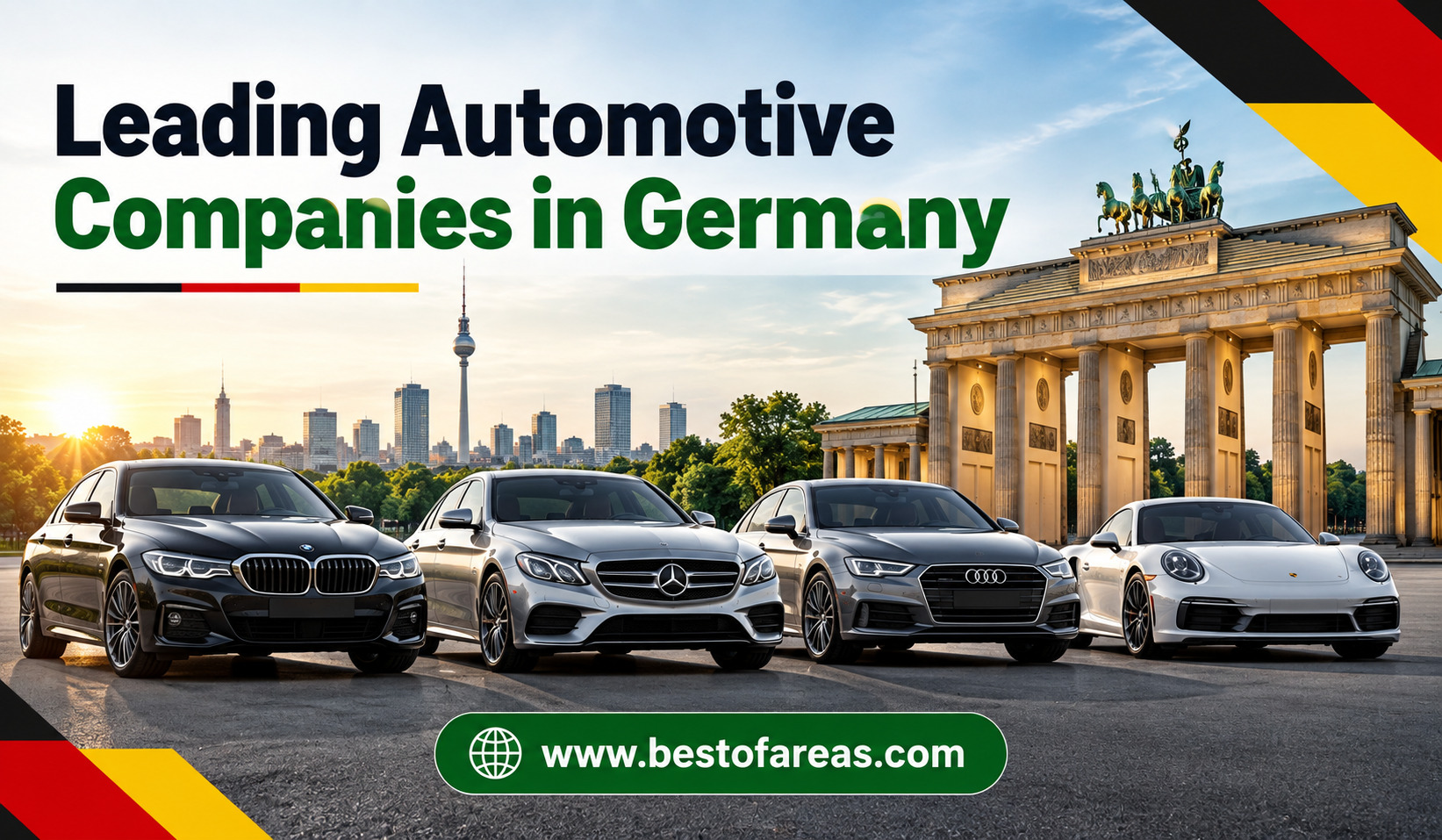
Germany is one of the most important countries in the global automotive industry. For more than a century, German car makers have played a major role in changing how people travel, work, and use personal vehicles. The country is known for companies that produce passenger cars, commercial vehicles, luxury models, sports cars, electric vehicles, and automotive parts.
The German automotive industry is supported by a large network of manufacturers, suppliers, engineers, technology companies, and skilled workers. German brands are sold in many parts of the world and are often associated with strong build quality, advanced safety features, comfortable interiors, and careful design.
Several major companies have their roots in Germany, including Volkswagen, BMW, Mercedes-Benz, Porsche, Audi, Opel, and MAN. Each company has its own history, customers, vehicle range, and approach to the changing automobile market. At the same time, these businesses are adapting to growing interest in electric cars, cleaner transportation, connected vehicles, and new ways of using technology.
Volkswagen
Volkswagen is one of the most recognized automotive companies in Germany. The company began in the 1930s and has grown into a large international automotive group. Its name means “people’s car,” and the brand has traditionally focused on producing vehicles for a wide range of customers.
Volkswagen is known for models such as the Golf, Polo, Passat, Tiguan, and Touareg. Over the years, the company has built a strong presence in both European and international markets. Its vehicles cover several segments, from smaller city cars to larger family SUVs.
The company is also investing heavily in electric vehicles. Its ID range represents Volkswagen’s move toward electric mobility. Models in this range are designed for drivers who want electric power without giving up the everyday practicality associated with the Volkswagen name.
Volkswagen’s size gives it an important place in Germany’s automotive sector. Through its wider group, the company is also connected with several well-known automotive brands around the world.
BMW
BMW, based in Munich, is another leading name in the German automotive industry. The company is widely known for premium cars and motorcycles. BMW has built its reputation around design, driving performance, comfort, and technology.
The company produces cars across many sizes and styles. Its 3 Series is one of its best-known models, while the 5 Series and 7 Series serve customers looking for larger and more luxurious vehicles. BMW also has a large SUV range, including models from the X family.
Electric vehicles have become an increasingly important part of BMW’s business. The company offers electric models under its BMW i range as well as electric versions of some of its existing vehicle families. This allows BMW to serve customers who are moving from traditional engines to electric power.
BMW also owns the MINI brand and Rolls-Royce Motor Cars, giving the wider group a presence across different parts of the premium vehicle market.
Mercedes-Benz
Mercedes-Benz is one of the world’s most famous luxury car brands and has deep roots in Germany. The company’s history is closely connected with the early development of the automobile. Today, Mercedes-Benz produces luxury cars, SUVs, vans, and other vehicles.
The brand is known for combining comfort, elegant design, safety, and modern technology. Its C-Class, E-Class, and S-Class models have long been important names in the premium car market. Mercedes-Benz also produces SUVs in several sizes.
Electric vehicles are becoming more important to the company. The EQ family was introduced as part of Mercedes-Benz’s move toward electric mobility. The company continues to develop electric cars while maintaining its traditional focus on luxury and comfort.
Mercedes-Benz also has a strong commercial vehicle business. Its vans are used by businesses, delivery services, and other customers across different countries.
Audi
Audi is another major German automotive brand and is part of the Volkswagen Group. The company has its headquarters in Ingolstadt, Bavaria, and has developed a strong global reputation for modern design, technology, and premium vehicles.
Audi produces cars and SUVs for different types of customers. The A3 is a smaller premium model, while the A4, A6, and A8 have traditionally served customers looking for larger vehicles. The Q range provides SUV options.
Audi has also expanded its electric vehicle range. The e-tron name has become closely associated with the company’s electric models. These vehicles are designed to combine electric driving with the comfort and design expected from a premium Audi.
Audi’s famous four-ring logo is recognized around the world. The company competes with other German premium brands in several major markets and remains an important part of Germany’s automotive industry.
Porsche
Porsche is one of Germany’s best-known sports car companies. It is headquartered in Stuttgart and has a long history of producing high-performance vehicles. The Porsche name is strongly associated with sports cars, racing, design, and engineering.
The Porsche 911 is the company’s most famous model and has been produced in different versions for decades. Its distinctive shape and performance have made it one of the world’s best-known sports cars.
Porsche has also expanded beyond traditional sports cars. The Cayenne SUV and Macan have become important products for the company, while the Panamera provides a larger performance-focused car.
The Taycan marked an important step into the electric vehicle market. It showed that an electric car could also be designed around strong performance and a premium driving experience. Porsche continues to develop its electric vehicle plans while maintaining its identity as a performance-focused brand.
Opel
Opel is one of Germany’s oldest automobile manufacturers. The company began in the 19th century and later became one of the major car brands in the European market. Today, Opel is part of Stellantis, a global automotive group.
Opel has traditionally focused on practical vehicles for everyday drivers. Models such as the Corsa and Astra have been popular in European markets, while its SUV and family vehicle range has expanded over time.
The company is also moving toward electric mobility. Electric versions of familiar Opel models give customers more options as European markets move toward cleaner forms of transportation.
Opel remains an important part of Germany’s automotive history because of its long manufacturing tradition and its role in making cars accessible to a broad group of customers.
MAN
When discussing leading automotive companies in Germany, it is important to look beyond passenger cars. MAN Truck & Bus is a major German manufacturer of trucks, buses, and other commercial vehicles.
MAN has a long history in transportation and serves businesses that depend on heavy vehicles for moving goods and people. Its trucks are used across Europe and in other international markets.
The company is also working on cleaner transportation. Electric buses and electric commercial vehicles are becoming more important as cities and businesses look for ways to reduce emissions.
MAN’s work highlights the wider importance of Germany’s automotive sector. The industry is not only about personal cars. Trucks, buses, delivery vehicles, and other commercial transportation also play a major role.
Continental
Continental is different from companies such as BMW or Mercedes-Benz because it is primarily a major automotive supplier rather than a passenger car brand. The company is based in Hanover and supplies products and systems used by vehicle manufacturers.
Continental has a long history in tires and has become involved in many other areas of vehicle technology. Its products can be found in vehicles made by manufacturers around the world.
The company works on areas such as vehicle safety, braking, electronics, tires, and systems that support modern driving. As cars become more connected and electric, suppliers such as Continental have an increasingly important role in the development of vehicles.
Its presence shows how large Germany’s automotive industry really is. The country’s strength comes not only from famous car brands but also from the many companies that supply the parts and technology needed to build modern vehicles.
Bosch
Bosch is another major German automotive supplier. Although the company works across several industries, automotive products are a major part of its business.
Bosch has supplied automotive components for many decades. Its work covers areas connected with vehicle electronics, safety, engines, electric vehicles, and other vehicle systems.
The company’s importance comes from its position behind the scenes. Drivers may not always see the Bosch name on their cars, but its technology can be part of vehicles produced by many different manufacturers.
As the automobile industry changes, Bosch is also working on technologies for electric vehicles and increasingly connected vehicles. Its role demonstrates how suppliers contribute to the development of the modern automobile.
The Changing German Automotive Industry
Germany’s automotive industry is going through a major period of change. Traditional petrol and diesel vehicles remain important, but electric vehicles are becoming a larger part of company plans and consumer choices.
This change is affecting almost every part of the industry. Car manufacturers are developing new electric models, while suppliers are producing components for electric power systems, batteries, charging, safety, and vehicle electronics.
German companies are also responding to changing customer expectations. Buyers increasingly want vehicles that offer better fuel economy, lower running costs, improved safety, and useful digital features. At the same time, customers in different countries have different needs, so manufacturers must offer a broad range of vehicles.
Competition is also increasing. German brands face established companies from Japan, South Korea, the United States, and other European countries. New electric vehicle manufacturers have added another layer of competition to the market.
Despite these changes, Germany remains an important center for automobile manufacturing and development. Its long history, skilled workforce, large supplier network, and strong global brands give the country an important position in the industry.
Why German Automotive Companies Matter
German automotive companies have influenced the global automobile market in many ways. They have helped develop vehicles that combine performance, comfort, safety, and practical everyday use. Their products are sold in markets across Europe, Asia, North America, and many other regions.
The industry also supports millions of jobs directly and indirectly through manufacturing, suppliers, dealerships, transportation, research, and other related activities. Automotive production is closely connected with many other parts of the German economy.
Another important strength is the relationship between manufacturers and suppliers. Companies such as Bosch and Continental work alongside vehicle manufacturers and provide products used in different types of vehicles. This broad network helps Germany remain a major automotive center.
The future, however, will not simply depend on continuing the traditions of the past. German companies need to adjust to electric vehicles, changing customer needs, stricter environmental requirements, and stronger international competition.
Future of Germany’s Automotive Industry
The future of Germany’s automotive industry will likely be shaped by electric vehicles and new forms of vehicle technology. Major manufacturers are increasing their electric vehicle offerings, while suppliers are changing their products to support the new generation of cars and commercial vehicles.
Manufacturing is also changing. Factories need to produce new types of vehicles while maintaining quality and controlling costs. Companies are investing in new production methods, battery technology, software, and other areas that are becoming more important in modern vehicles.
Germany’s established brands have an advantage in terms of history and customer recognition, but they still need to keep adapting. The automobile market is becoming more competitive, and customers have more choices than ever before.
For Germany, maintaining a strong automotive industry will also depend on supporting research, training skilled workers, improving manufacturing, and creating conditions that allow companies to compete internationally.
Conclusion
Germany remains one of the world’s leading automotive countries, with a combination of famous car brands and powerful suppliers. Volkswagen, BMW, Mercedes-Benz, Audi, Porsche, and Opel have built strong positions in passenger vehicles, while companies such as MAN serve the commercial vehicle market. Suppliers including Continental and Bosch support manufacturers with important vehicle products and technology.
Each company has its own history and identity, but all are facing a similar change as the industry moves toward electric and more connected vehicles. The transition will bring challenges, but it will also create new opportunities for German manufacturers and suppliers.
The strength of Germany’s automotive sector comes from more than its famous logos. It is supported by decades of manufacturing experience, a large supplier network, skilled workers, research, and a strong international customer base. These factors continue to make German automotive companies important players in the global automobile industry.
Frequently Asked Questions
Which is the largest automotive company in Germany?
Volkswagen is one of the largest automotive companies based in Germany and has a major presence in markets around the world.
Which German company is famous for luxury cars?
Mercedes-Benz, BMW, and Audi are widely known for their premium and luxury vehicles. Each brand has its own approach to design, comfort, performance, and technology.
Is Porsche a German company?
Yes. Porsche is a German automotive company headquartered in Stuttgart. It is especially known for sports cars and performance-focused vehicles.
Which German automotive companies make electric cars?
Volkswagen, BMW, Mercedes-Benz, Audi, and Porsche all produce electric vehicles. Other German companies and suppliers are also developing products for electric transportation.
Are German automotive companies important outside Germany?
Yes. German automotive manufacturers and suppliers have a large international presence. Their vehicles and automotive products are sold and used in many countries around the world.